
What is Gentian Root?
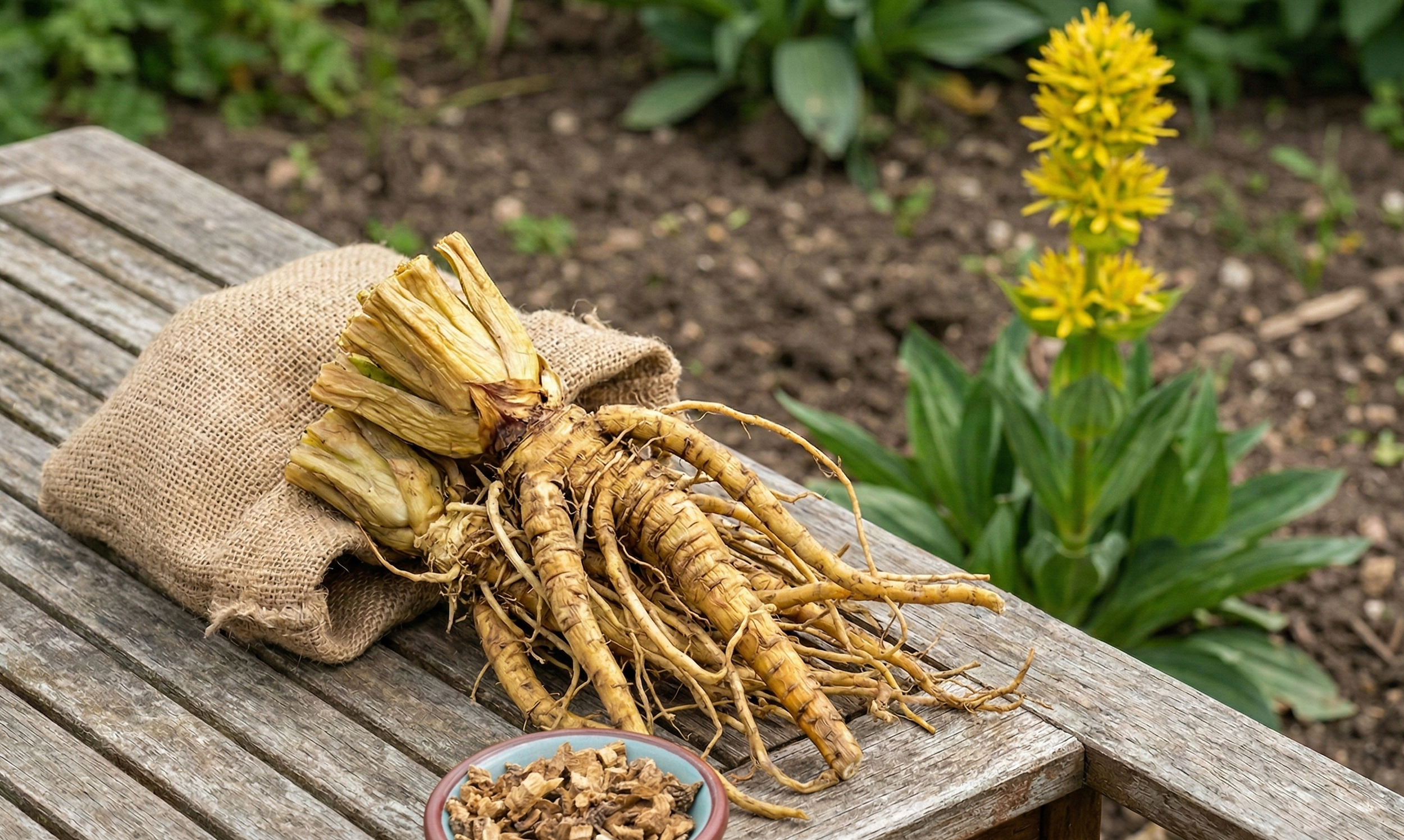
Gentian root is a deeply bitter root traditionally used to support digestion and appetite.
Long before capsules lined store shelves, bitter roots were part of everyday life. In many rural communities, including Amish households, a small bottle of dark, bitter tincture often lived near the kitchen table. A few drops were taken before a heavy meal. Not because it was trendy. Because it was trusted.
Gentian root earned its place that way. Not through marketing, but through generations of practical use. Today, it remains one of the most respected bitter herbs in traditional herbalism
Gentian Root at a Glance
Botanical Name:Gentiana lutea
Plant Family: Gentianaceae
Used For: Digestive support, appetite stimulation, traditional bitter tonic
Traditional Preparation: Dried root decoction, tincture, or powdered root
Flavor Profile: Intensely bitter
What Is Gentian Root?
Gentian root comes from Gentiana lutea, a tall flowering plant native to the mountainous regions of Europe.
The medicinal portion is the underground root, which contains some of the most potent natural bitter compounds found in herbal medicine. Traditionally, gentian root has been used to:
Support healthy digestion
Stimulate appetite
Promote normal gastric secretions
Support liver and gallbladder function
Modern herbalists classify gentian as a “bitter tonic.” Bitters are herbs that stimulate the digestive process through taste receptors on the tongue, which signal the body to begin producing saliva, stomach acid, and digestive enzymes.
Gentian is often studied for its role in digestive physiology and gastric stimulation.
Historical & Traditional Use
Gentian root has been used for over 2,000 years. Its name is believed to come from King Gentius of Illyria, who was said to have discovered its medicinal properties.
In European herbal traditions, gentian became a cornerstone digestive remedy. It was commonly prepared as:
A pre-meal bitter tonic
A decoction for sluggish digestion
A component in traditional herbal formulas
In rural American communities, including Amish herbal practice, gentian root has long been included in digestive tinctures. The philosophy was simple: when digestion is supported, overall wellness follows.
Gentian was not viewed as a cure-all. It was respected as a tool to gently encourage the body’s natural processes.
How It Works
Active Compounds
Gentian root contains several bioactive compounds, including:
Secoiridoid glycosides such as gentiopicroside and amarogentin
Xanthones
Alkaloids
Bitter principles responsible for its strong taste
Amarogentin is considered one of the most bitter natural compounds known. These bitter compounds activate taste receptors that initiate digestive reflexes.
What Research Suggests
Research indicates that bitter herbs like gentian may:
Stimulate saliva production
Increase gastric juice secretion
Promote bile flow
Support healthy appetite regulation
Studies published in herbal pharmacology literature suggest that gentian’s bitter compounds interact with receptors in the digestive tract, encouraging normal digestive function.
While promising, gentian root is traditionally used as supportive care, not as a treatment for specific medical conditions.
Benefits People Commonly Seek
People commonly use gentian root for:
Occasional indigestion
Feeling overly full after meals
Low appetite
Digestive sluggishness
Support during seasonal digestive changes
As with all herbs, experiences vary from person to person.
Safety & Considerations
Gentian root is generally well tolerated when used appropriately, but there are important considerations.
Consult a healthcare professional if you:
Have stomach ulcers or excessive stomach acid
Are pregnant or nursing
Have gallstones
Take medications that affect stomach acid production
Take blood pressure medications
Because gentian stimulates gastric secretions, it may not be appropriate for individuals with active ulcers or hyperacidity.
Possible Side Effects:
Stomach discomfort in sensitive individuals
Headache (rare)
Nausea if taken in high amounts
As with any herbal product, follow recommended serving sizes and consult a qualified healthcare professional if you have medical conditions or take prescription medications.
This information is for educational purposes only and is not intended to diagnose, treat, cure, or prevent any disease.
Frequently Asked Questions
-
Many people use gentian in small amounts as part of a digestive formula. Daily use should be discussed with a healthcare professional, especially if you have underlying digestive conditions.
-
Because gentian acts through bitter receptors, effects on digestion may begin shortly after consumption, particularly when taken before meals.
-
Gentian stimulates stomach acid production. If you take acid-reducing medications, consult your healthcare provider before use.
-
Gentian is intensely bitter. It is often diluted in tinctures or combined with complementary herbs to balance flavor.
