
What is Irish Moss
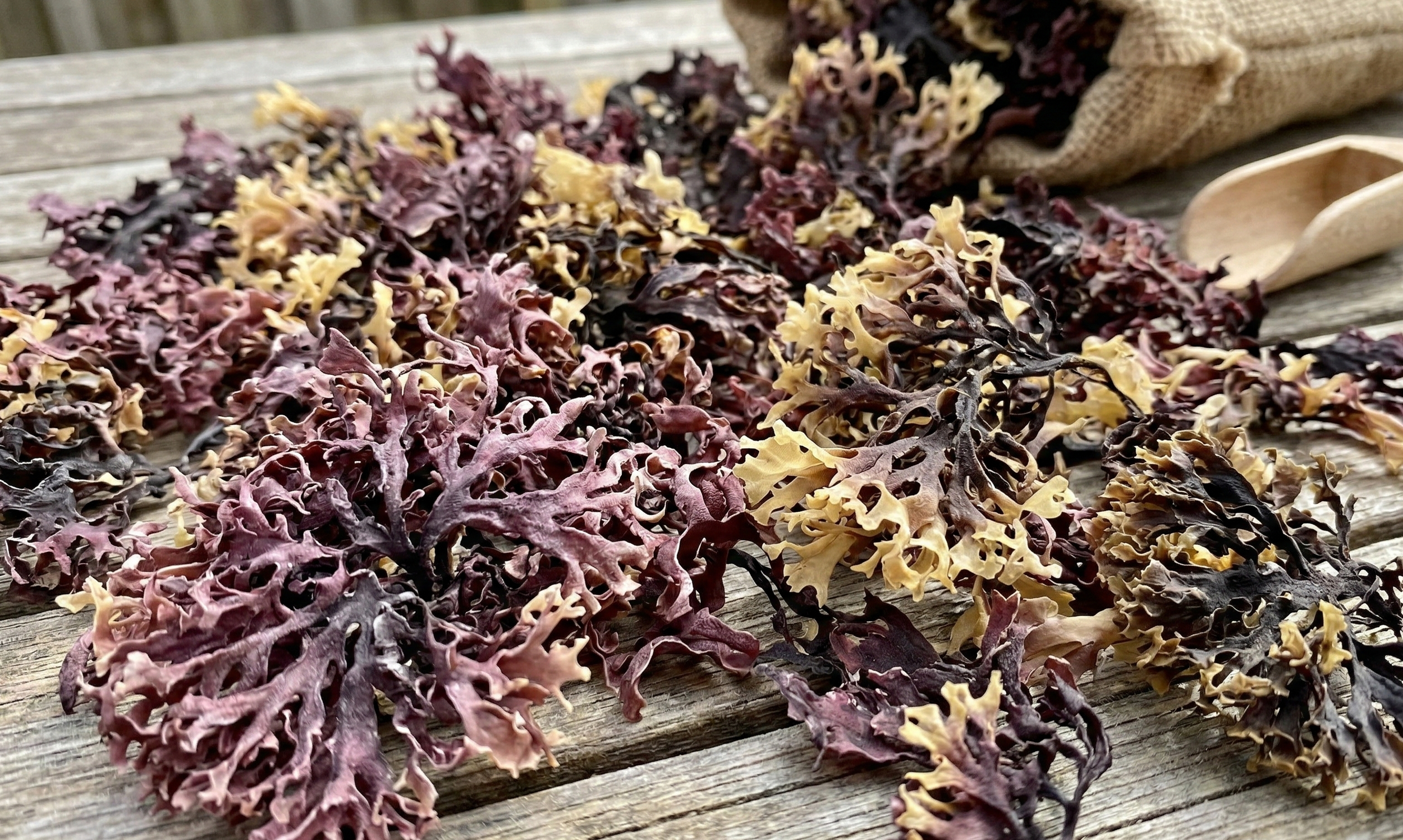
Irish moss is a mineral-rich seaweed traditionally used as a natural thickener and nourishing tonic.
Along the cold Atlantic coastlines of Ireland and the Caribbean, generations of coastal families harvested a small red seaweed that washed against the rocks. It wasn’t glamorous, but it was valued. In lean winters it went into soups and broths. During illness it was boiled into soothing drinks. In kitchens it became a natural way to thicken puddings and custards.
For many people today, Irish Moss enters the conversation through wellness circles and natural remedies. But its story began much earlier as a simple food gathered from the ocean and used for nourishment.
At its core, Irish Moss is a type of seaweed known for its natural gel-forming properties and its dense mineral content.
Irish Moss at a Glance
Botanical Name: Chondrus crispus
Plant Family: Gigartinaceae
Used For: Mineral support, digestive health, natural thickening agent in foods
Traditional Preparation: Soaked and blended into gel, boiled into broths, or used as a thickener
Flavor Profile: Mild, slightly oceanic, neutral once prepared
What Is Irish Moss?
Irish Moss is a species of red algae that grows along the rocky coastlines of the North Atlantic. Despite the name, it is not a moss but a marine seaweed.
It has been traditionally used in two main ways.
First, as a culinary ingredient. Irish Moss contains natural compounds called carrageenans that create a gel when hydrated. This makes it useful for thickening soups, desserts, and beverages.
Second, it has been used in traditional herbal preparations for its naturally occurring minerals and polysaccharides.
Irish Moss is often prepared by soaking the dried seaweed and blending it into a gel, which can then be added to foods or herbal formulations.
Historical & Traditional Use
Irish Moss became widely known during the Irish Potato Famine in the mid-1800s, when coastal communities relied on it as a supplemental food source. It could be gathered directly from shoreline rocks, cleaned, and boiled with milk or water to make nourishing puddings and broths.
Traditional herbalists also valued Irish Moss as a soothing preparation for the throat and digestive tract because of its mucilaginous texture.
Outside of Ireland, similar seaweeds have been used for centuries throughout the Caribbean, where Irish Moss drinks became a staple tonic. These drinks were often blended with spices and milk to create a thick, nutrient-dense beverage.
Across cultures, the common thread is simple: it was used as a food first, and valued for the nourishment it provided.
How It Works
Active Compounds
Irish Moss contains several naturally occurring compounds that contribute to its traditional uses.
Carrageenan
Carrageenan is a natural polysaccharide responsible for Irish Moss’s gel-forming properties. When hydrated, it creates a thick, smooth texture that can soothe and coat tissues.
Minerals
Irish Moss contains small amounts of minerals such as:
Iodine
Potassium
Magnesium
Calcium
These minerals contribute to its nutritional value when used as a food ingredient.
Antioxidant Compounds
Seaweeds, including Irish Moss, contain antioxidant compounds that are being studied for their role in cellular health.
What Research Suggests
Modern research has explored several properties of red algae species like Chondrus crispus.
Studies suggest that compounds found in Irish Moss may:
Provide antioxidant activity
Support healthy gut microbiota
Contribute trace minerals to the diet
Most studies evaluate extracts or isolated compounds, so traditional uses should be understood within the broader context of diet and herbal practice rather than as medical treatment.
Benefits People Commonly Seek
People commonly use Irish Moss for:
Supporting overall mineral intake
Adding natural thickening to foods and beverages
Supporting digestive comfort
Providing a plant-based source of nutrients
Supporting general wellness through whole-food ingredients
Interest in Irish Moss has grown in recent years as people look for simple, food-based ways to support nutrition.
Safety & Considerations
Irish Moss has a long history as a food ingredient, but there are still considerations to keep in mind.
Consult a healthcare professional if you:
Have thyroid conditions
Are taking thyroid medication
Are pregnant or nursing
Have been advised to monitor iodine intake
Medication interactions
Because Irish Moss contains iodine, individuals taking thyroid medications should consult a healthcare provider before using it regularly.
General guidance
Irish Moss is most commonly consumed in small amounts as part of food or blended gel preparations.
As with any natural ingredient, quality sourcing and proper preparation matter.
Disclaimer:
This information is for educational purposes only and is not intended to diagnose, treat, cure, or prevent any disease. Always consult a qualified healthcare professional before beginning any new supplement or herbal regimen.
Frequently Asked Questions
-
Many people consume Irish Moss regularly as part of food or beverages. However, due to its iodine content, moderation and professional guidance are recommended for individuals with thyroid concerns.
-
Irish Moss is most commonly used as a nutritional ingredient rather than a fast-acting remedy. Any benefits are typically associated with consistent dietary use.
-
Because of its iodine content, Irish Moss may interact with thyroid medications. Anyone taking these medications should consult a healthcare provider before using it regularly.
-
When raw or dried, Irish Moss has a mild ocean scent. Once soaked and blended into gel, it becomes mostly neutral in flavor and easily blends into smoothies, soups, and other foods.
Sources & References
PubMed – Research on Chondrus crispus and red algae polysaccharides
Herbal Medicine: Biomolecular and Clinical Aspects (2nd Edition)
Seaweed Sustainability and Marine Nutrition Studies
Traditional Irish and Caribbean culinary references on Irish Moss use
