
What is Bladderwrack?
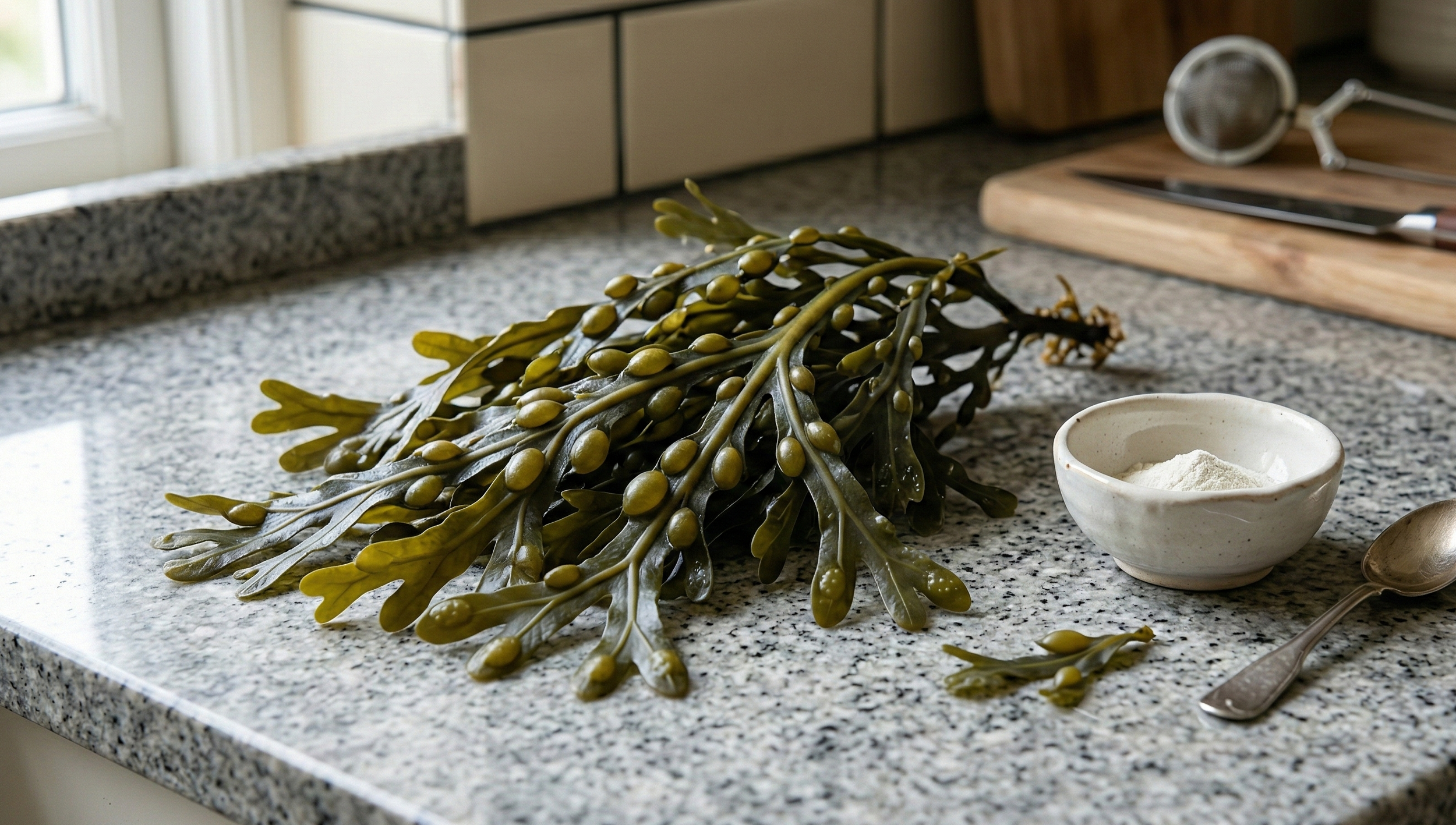
Bladderwrack is a mineral-rich seaweed traditionally used to support thyroid function, digestion, and overall metabolic balance.
Along the rocky coasts of the North Atlantic, thick ribbons of olive-brown seaweed cling to stone, rising and falling with the tide. For generations, coastal communities gathered it by hand, drying it in the open air before steeping it into broths and tonics. Long before capsules and extracts, it was simply part of the shoreline and part of daily life.
Bladderwrack is not an exotic discovery. It is a traditional coastal herb with a long record of use in European herbal practice. Today, it continues to be studied for its naturally occurring iodine, antioxidants, and unique plant compounds.
Bladderwrack at a Glance
Botanical Name: Fucus vesiculosus
Plant Family: Fucaceae
Used For: Thyroid support, metabolic balance, digestive wellness
Traditional Preparation: Dried and steeped as tea, powdered, or prepared as tincture
Flavor Profile: Salty, mineral-rich, mildly oceanic
What Is Bladderwrack?
Bladderwrack (Fucus vesiculosus) is a brown seaweed found along the cold coastal waters of the Atlantic and Pacific Oceans. It is easily recognized by the small air-filled “bladders” that help it float upright in tidal waters.
Traditionally used in European herbalism, bladderwrack is valued for its naturally occurring iodine and trace minerals. It has been studied for its potential role in supporting thyroid function, digestive health, and metabolic balance.
Bladderwrack contains compounds such as fucoidan, alginic acid, polyphenols, and antioxidants. These constituents are currently being researched for their role in supporting overall wellness.
Historical & Traditional Use
Bladderwrack has been used for centuries in coastal regions of Ireland, Scotland, France, and Scandinavia. In the 19th century, it became part of Western herbal traditions, particularly in formulas designed to support metabolism and glandular balance.
In traditional European herbal practice, it was often recommended for individuals with signs of iodine deficiency, particularly in regions where soil iodine levels were low. It was also incorporated into digestive tonics and mineral-rich broths.
Sea vegetables like bladderwrack were valued not for a single isolated compound, but for their whole-plant mineral profile.
How It Works
Active Compounds
Bladderwrack contains several naturally occurring constituents:
Iodine: Essential for healthy thyroid hormone production
Fucoidan: A sulfated polysaccharide studied for immune and cellular support
Alginic Acid: A compound that may support digestive function
Polyphenols & Antioxidants: Studied for their role in protecting cells from oxidative stress
What Research Suggests
Research indicates that iodine plays a critical role in thyroid hormone production, which influences metabolism, energy levels, and overall endocrine balance. Bladderwrack is one of the richest natural plant sources of iodine.
Fucoidan and related compounds are currently being studied for their antioxidant and immune-supportive properties. Some preliminary studies suggest potential roles in cellular health, though more human research is needed.
While bladderwrack has a long history of traditional use, modern research continues to evaluate its full range of effects.
Benefits People Commonly Seek
People commonly use bladderwrack for:
Supporting healthy thyroid function
Maintaining metabolic balance
Promoting digestive wellness
Providing natural dietary iodine
Supporting overall mineral intake
Individual results may vary, and it is not intended to diagnose, treat, cure, or prevent any disease.
Safety & Considerations
Bladderwrack contains naturally occurring iodine, which can influence thyroid activity.
Consult a healthcare professional before use if you:
Have a thyroid condition (hyperthyroidism, hypothyroidism, Hashimoto’s, Graves’ disease)
Are taking thyroid medication
Are pregnant or breastfeeding
Are taking medications that affect thyroid function
Excess iodine intake may lead to thyroid imbalance in sensitive individuals. Dosage and preparation matter.
As with any herbal product, quality sourcing and appropriate preparation are important.
Frequently Asked Questions
-
Daily use may be appropriate for some individuals, but due to its iodine content, long-term use should be discussed with a healthcare professional.
-
Effects depend on the reason for use, individual iodine status, and overall health. Some individuals report gradual changes over weeks.
-
Bladderwrack may interact with thyroid medications due to its iodine content. Always consult a healthcare professional before combining them.
-
It has a distinctly mineral, slightly salty flavor, similar to other sea vegetables.
Sources & References
PubMed Database: Studies on iodine and thyroid function
PubMed Database: Research on fucoidan and immune response
Bone, K., & Mills, S. Principles and Practice of Phytotherapy
Hoffmann, D. Medical Herbalism
European Medicines Agency herbal monographs
