
What is Dulse?
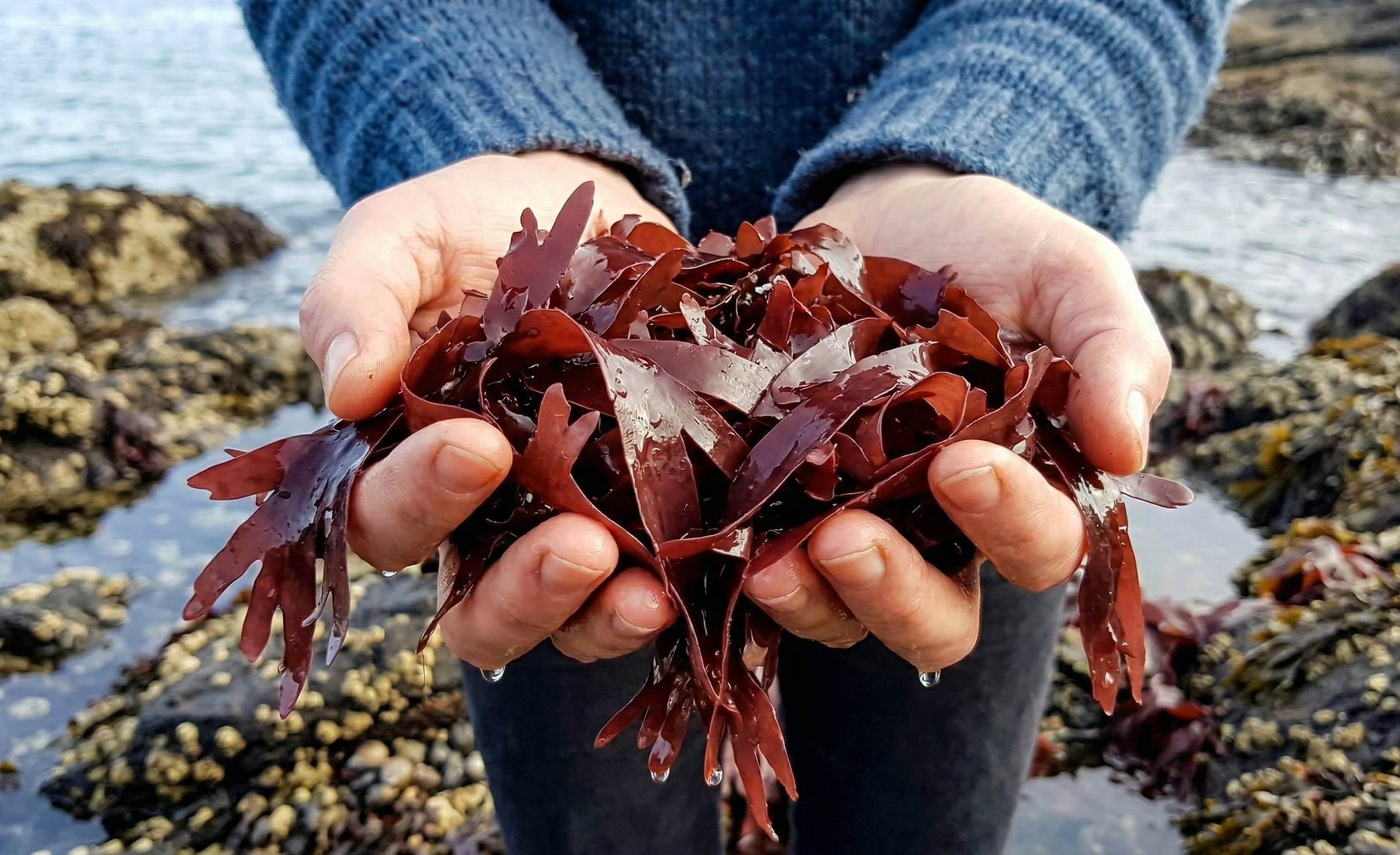
Dulse is mineral-rich red sea vegetable traditionally gathered along cold northern coastlines.
The tide pulls back and leaves behind ribbons of deep red along the rocks. For generations, coastal families in Ireland and Atlantic Canada gathered those ribbons by hand, drying them in the open air and storing them for the winter months.
Dulse was not a trend. It was food. It was sustenance. It was part of the shoreline rhythm.
Today, dulse continues to be used as both a nourishing food and a traditional herbal ingredient valued for its mineral content and antioxidant compounds
Dulse at a Glance
Botanical Name: Palmaria palmata
Plant Family: Palmariaceae
Used For: Mineral support, thyroid support, antioxidant intake
Traditional Preparation: Air-dried and eaten as flakes, powder, or infused in broths
Flavor Profile: Salty, slightly smoky, umami-rich
What Is Dulse?
Dulse is a red marine algae, scientifically known as Palmaria palmata, that grows along the northern Atlantic and Pacific coastlines.
It is considered an edible sea vegetable and has been traditionally used as both a food source and a nutritive botanical. Dulse is naturally rich in minerals such as iodine, potassium, magnesium, and iron. It also contains fiber, protein, and antioxidant compounds.
Traditionally, dulse has been used to support mineral replenishment, particularly in coastal communities where sea vegetables were part of daily nutrition. Modern research has studied dulse for its iodine content and its antioxidant properties.
Historical & Traditional Use
Dulse has a long history of use in Ireland, Iceland, Scotland, and parts of coastal North America. Historical records show it being consumed as early as the 12th century.
In Ireland, it was chewed dried as a snack. In Scotland, it was added to soups and broths. In Atlantic Canada, it became a staple winter food after being harvested and sun-dried during warmer months.
Among traditional herbalists, dulse was valued primarily for its mineral content. It was often included in broths or tinctures intended to nourish the body during periods of weakness or seasonal transition.
Its role was simple: provide nourishment drawn directly from the sea.
How It Works
Active Compounds
Dulse contains:
Iodine – essential for healthy thyroid hormone production
Potassium & Magnesium – important electrolytes
Iron – necessary for oxygen transport in the blood
Polyphenols & Antioxidants – compounds that help counter oxidative stress
Fiber – supports digestive health
What Research Suggests
Research has examined red seaweeds like dulse for:
Their natural iodine content and its relationship to thyroid function
Antioxidant activity due to polyphenol compounds
Potential anti-inflammatory properties
While dulse is not a medication, its nutrient profile is one reason it remains popular in natural wellness traditions.
As with any iodine-rich food, intake should be balanced and individualized.
Benefits People Commonly Seek
People commonly use dulse for:
Supporting healthy thyroid function
Replenishing trace minerals
Adding natural iodine to the diet
Supporting antioxidant intake
General nutritional support
These uses are based on traditional practice and emerging nutritional research.
Safety & Considerations
Dulse is generally considered safe when consumed in typical dietary amounts.
However:
Individuals with thyroid disorders should consult a healthcare professional before increasing iodine intake.
Those taking thyroid medication should seek medical guidance.
Excess iodine consumption may cause adverse effects.
Pregnant or nursing individuals should consult a qualified healthcare provider before use.
As with all botanicals and natural extracts, balance and informed use are important.
This information is not intended to diagnose, treat, cure, or prevent any disease.
Frequently Asked Questions
-
In moderate dietary amounts, dulse is generally safe. Those with thyroid conditions should consult a healthcare provider due to its iodine content.
-
Dulse is primarily used as a nutritive sea vegetable rather than for immediate effects. Benefits are typically associated with consistent dietary use.
-
Because dulse contains iodine, individuals taking thyroid medication should consult a healthcare professional before use.
-
Dulse has a naturally salty, umami flavor with mild smoky notes when dried.
Sources & References
Brown, E. M., Allsopp, P. J., Magee, P. J., et al. (2014). Seaweed and human health. Nutrition Reviews.
Teas, J., Pino, S., Critchley, A., & Braverman, L. (2004). Variability of iodine content in common commercially available edible seaweeds. Thyroid.
Irish Seaweed Kitchen – Traditional Uses of Atlantic Sea Vegetables
PubMed Database: Studies on Palmaria palmata antioxidant and mineral
