
What is Ginger?
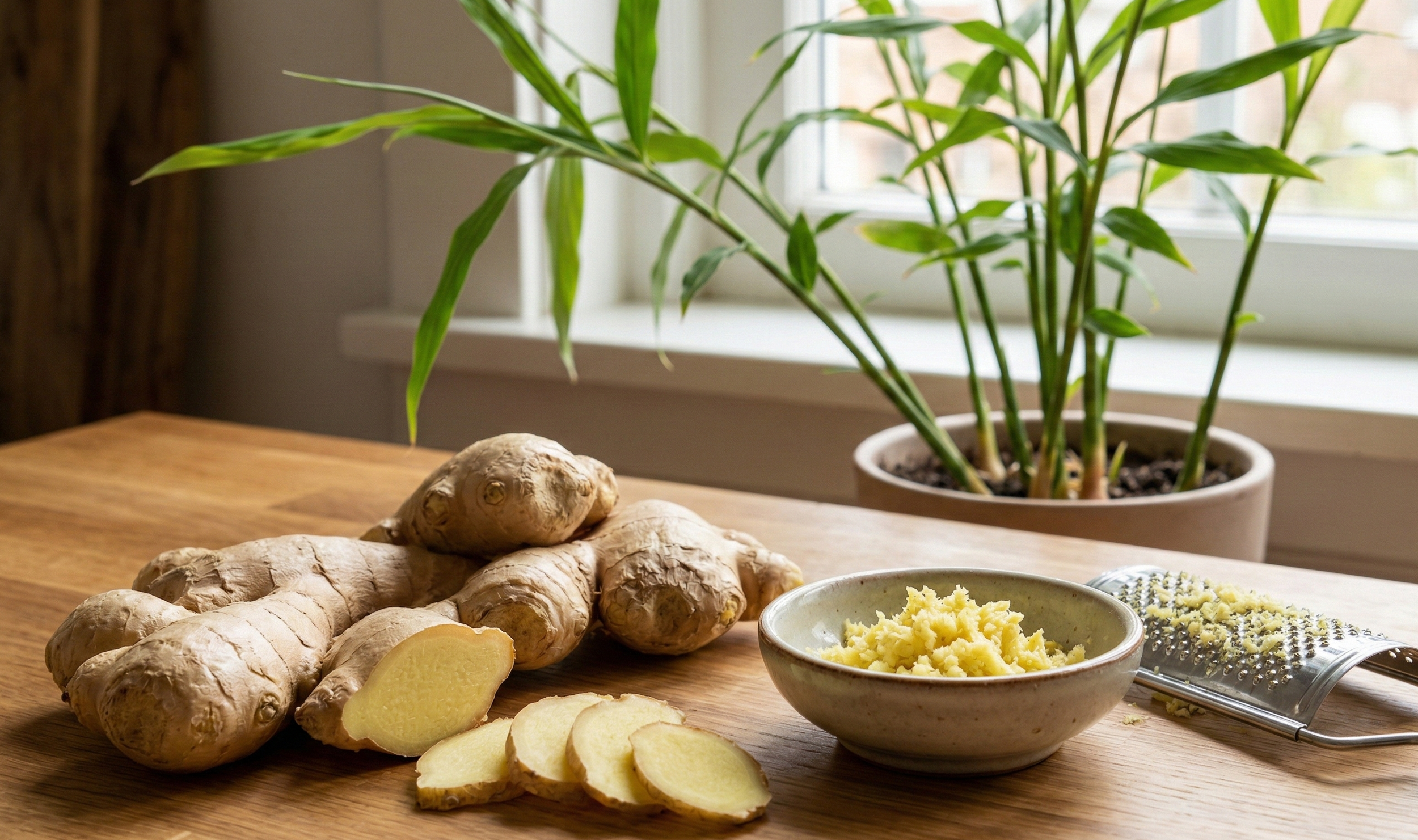
Ginger is a time tested root traditionally used to support digestion, circulation, and everyday wellness.
Ginger has been part of kitchen tables and apothecary shelves for generations. In many Amish homes, it was not spoken about as a supplement or trend. It was simply something you reached for. A root kept in the pantry. A tea poured when someone felt unsettled. A steady presence.
Before ginger was studied in laboratories, it was sliced, simmered, and steeped by hand. Its warmth was familiar. Its scent unmistakable.
Today, ginger remains one of the most widely used botanical ingredients in the world. Here is what it is, how it has been used, and what research currently suggests.
Ginger at a Glance
Botanical Name: Zingiber officinale
Plant Family: Zingiberaceae
Used For: Digestive support, nausea, circulation support
Traditional Preparation: Fresh root, dried powder, decoction (simmered tea), tincture
Flavor Profile: Warm, spicy, slightly sweet with a sharp finish
What Is Ginger?
Ginger is the underground rhizome of the plant Zingiber officinale. Though commonly called a root, it is technically a rhizome, a horizontal stem that grows beneath the soil.
It is native to Southeast Asia and has been cultivated for thousands of years for both culinary and traditional herbal use.
Traditionally, ginger has been used to support digestion and ease occasional nausea. It has also been studied for its antioxidant and anti inflammatory properties. Modern research continues to explore its role in digestive comfort, immune response, and circulation support.
Historical & Traditional Use
Ginger appears in ancient Chinese, Indian, Middle Eastern, and European herbal traditions. It traveled along trade routes not only as a spice but as a valued botanical.
In traditional preparations, ginger was often simmered into teas or combined with other herbs to warm the body during colder months. Many cultures regarded it as a stimulating herb, meaning it was thought to promote movement in the digestive system and circulation.
In Amish herbal traditions, ginger has long been included in home remedies for digestive upset and seasonal discomfort. Recipes were passed down through families and prepared in small batches with simple methods.
How It Works
Active Compounds
Ginger contains several bioactive compounds, most notably:
Gingerols
Shogaols
Zingerone
Volatile oils
Gingerols are the primary compounds found in fresh ginger and are responsible for much of its characteristic heat. When ginger is dried or heated, gingerols convert into shogaols, which are more concentrated and potent.
These compounds have been studied for their antioxidant activity and their potential influence on inflammatory pathways.
What Research Suggests
Research suggests ginger may support:
Digestive motility
Occasional nausea relief
Healthy inflammatory response
Circulatory function
Several clinical studies have examined ginger for nausea related to motion, pregnancy, and postoperative recovery. Other studies explore its potential role in muscle discomfort and metabolic health.
While findings are promising, ginger is not intended to diagnose, treat, cure, or prevent disease. Ongoing research continues to refine our understanding of its mechanisms.
Benefits People Commonly Seek
People commonly use ginger for:
Occasional digestive discomfort
Bloating and gas
Motion related nausea
Morning sickness support
Seasonal immune support
Warming support during cold weather
Individual experiences vary, and outcomes depend on dosage, preparation method, and overall health.
Safety & Considerations
Ginger is generally regarded as safe when used in typical culinary and supplemental amounts.
However:
Individuals who are pregnant should consult a healthcare professional before use.
Those taking blood thinning medications should speak with a provider, as ginger may influence platelet activity.
People with gallstones should consult a professional before using concentrated extracts.
Possible side effects in higher amounts may include:
Heartburn
Mild stomach upset
Mouth irritation
As with any botanical extract, consult a qualified healthcare professional before beginning use, especially if you are taking medications or managing a health condition.
Frequently Asked Questions
-
For most people, moderate daily use in food or standardized extracts is considered safe. Dosage and individual health status matter.
-
For nausea, some people report noticing effects within hours. For other uses, consistency over days or weeks may be necessary.
-
Because ginger may influence circulation, consult a healthcare provider before combining it with blood pressure or blood thinning medications.
-
Ginger has a warm, spicy flavor with a slight sweetness and a sharp finish. Fresh ginger is bright and pungent, while dried ginger is deeper and more concentrated.
Sources & References
PubMed Clinical Studies on Zingiber officinale
Herbal Medicine: Biomolecular and Clinical Aspects, 2nd Edition
World Health Organization Monographs on Selected Medicinal Plants
Traditional herbal pharmacology texts
